Are Softgel Capsules Halal?
A practical guide to softgel capsules for Muslim consumers. Learn why the capsule shell matters, which ingredients appear most often, and when softgels need closer halal checking.
Are Softgel Capsules Halal?
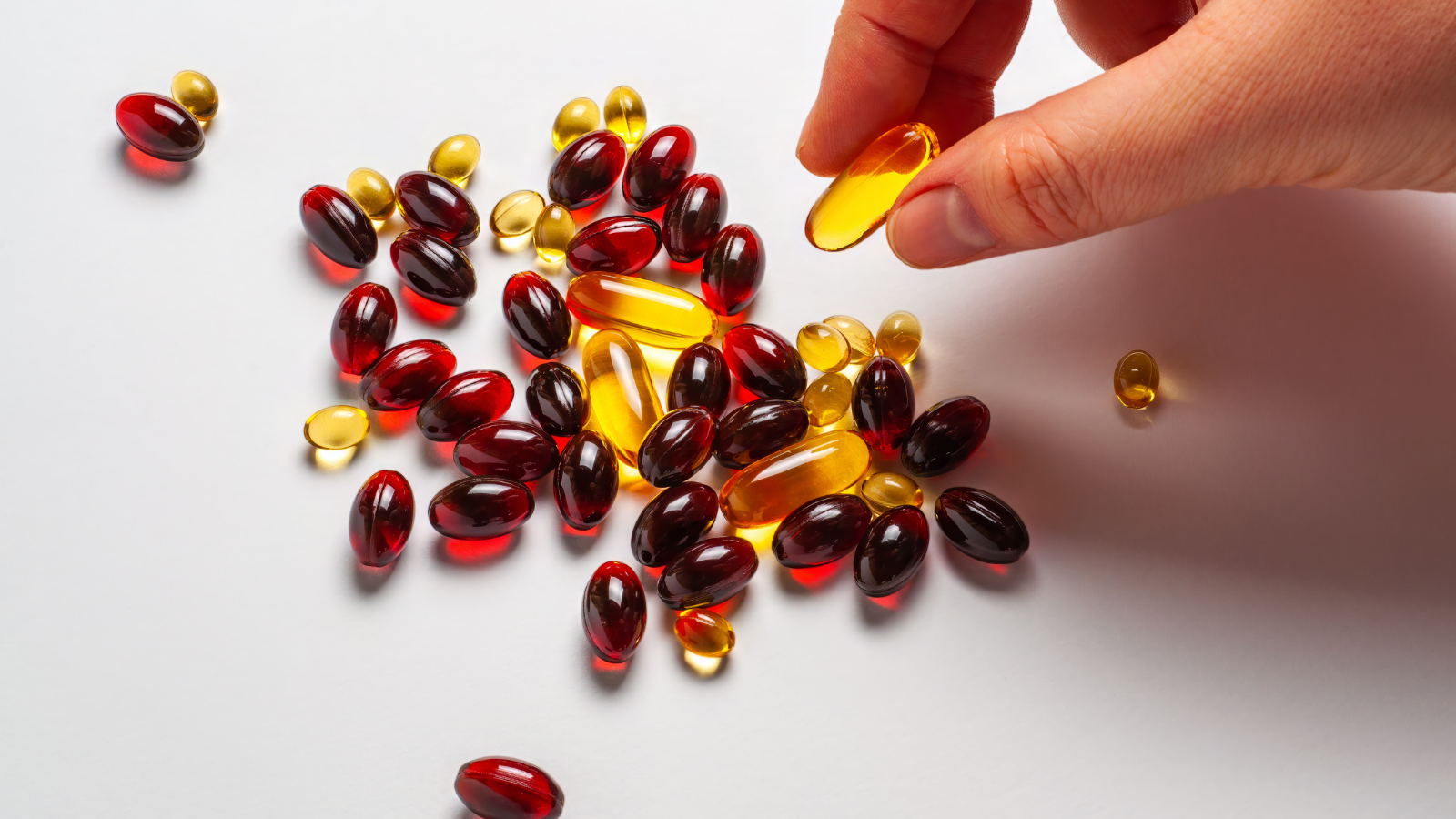
Softgels look cleaner than many supplements. They often come in a small shiny capsule, the label may focus on omega-3, vitamin D, or another active ingredient, and the rest of the formula is easy to ignore. But for Muslim consumers, the biggest halal question is often not the oil inside the capsule. It is the shell around it.
USP nomenclature guidance notes that a capsule shell may be a single piece and is usually soft gelatin in that form. FDA-approved product labels also commonly show softgel shells made with gelatin and glycerin. For example, multiple FDA labels list capsule-shell ingredients such as gelatin, glycerin, sorbitol blends, water, and colorants. oai_citation:0‡USP
That is why softgels deserve their own halal guide. A tablet, powder, and softgel may contain the same active ingredient, but the capsule shell changes the label-reading logic completely. oai_citation:1‡USP
Quick Answer
Softgel capsules are not automatically halal.
The practical rule is:
- many softgels use a shell made with gelatin plus glycerin or sorbitol-type plasticizers oai_citation:2‡FDA Access Data
- that means the first halal question is often the capsule shell, not the active ingredient inside
- if the product is halal-certified, that is usually the clearest answer
- if the shell is clearly non-gelatin or vegetarian, the product may be easier to assess, but you should still read the full label
- if the label only says “softgel” and gives no useful shell detail, many Muslim shoppers treat it as a product that needs closer checking
So the short honest answer is this: softgels are often really a gelatin-shell question. oai_citation:3‡USP
Why softgels are different from tablets and powders
A protein powder or standard tablet may raise halal questions through flavors, excipients, or coatings. A softgel adds another major layer before you even get to the active ingredient: the shell itself.
USP’s nomenclature guidance describes the common dosage-form distinction clearly: a hard capsule shell is usually two pieces, while a soft capsule is usually a single-piece soft gelatin shell. That does not mean every soft capsule is the same, but it does explain why “softgel” already tells you something important about likely composition. oai_citation:4‡USP
In real shopping, that means:
- a vitamin tablet and a vitamin softgel are not the same halal question
- an omega-3 liquid in a bottle and an omega-3 softgel are not the same halal question
- a supplement can look simple on the front and still become more complicated because of the shell
The shell is usually the first thing to investigate
This is the most important practical rule in the whole article.
FDA-approved labels for several capsule products show softgel shells commonly made from:
- gelatin
- glycerin
- sorbitol or sorbitol-glycerin blends
- purified water
- colorants such as iron oxides or titanium dioxide oai_citation:5‡FDA Access Data
That means a softgel can raise halal questions even when the active ingredient itself sounds uncomplicated. A fish oil softgel, vitamin E softgel, or hormone capsule may all use similar shell logic. oai_citation:6‡FDA Access Data
A practical way to think about it:
- inside fill = one question
- capsule shell = another question
- you need both to feel clear before the product feels easy
The common softgel ingredient pattern
Softgels tend to repeat the same structure more often than many shoppers realize.
A very typical label pattern looks like:
- active ingredient or oil fill
- capsule shell ingredients
- colorants or preservatives
FDA labels repeatedly show shell ingredients such as gelatin plus glycerin, sometimes with sorbitol solution, purified water, and colorants. This repetition is useful because it means you do not need to learn every supplement category from scratch. Once you understand softgel shells, you can apply the same logic across many products. oai_citation:7‡FDA Access Data
Where the halal question usually sits
Softgels usually create halal uncertainty in three places.
1. The gelatin shell
This is usually the biggest issue.
If the shell contains gelatin, then the real question becomes source and certification, not the word “softgel” itself. FDA labels make clear that gelatin is a routine shell ingredient in many capsules. oai_citation:8‡FDA Access Data
That is why many Muslim shoppers treat standard gelatin softgels as a product type that deserves more caution than ordinary tablets.
2. Glycerin and shell plasticizers
Even when shoppers notice gelatin, they often ignore the rest of the shell. FDA labels commonly list glycerin and sometimes sorbitol/glycerin blends as part of the capsule shell. That matters because glycerin itself can be a source-sensitive ingredient in halal discussions, even though not every glycerin ingredient is problematic. oai_citation:9‡FDA Access Data
So the shell is not only a gelatin question. It can also be a broader excipient question.
3. Colorants and added shell ingredients
Colorants are usually not the first halal issue in softgels, but they still belong to the full picture. FDA labels commonly list titanium dioxide, iron oxides, and other colorants in capsule shells. oai_citation:10‡FDA Access Data
This does not mean every colored softgel is suspicious. It means the shell is a real formulation layer, not just an invisible wrapper.
Which softgels are usually easier to assess
Some softgel situations are much easier than others.
These are usually easier:
- halal-certified softgels
- products that clearly state a non-gelatin or vegetarian capsule shell
- brands that disclose shell composition clearly
- simple formulas with transparent labeling
These usually need more checking:
- standard gelatin softgels with no halal certification
- imported supplements with vague labeling
- products where the active ingredient looks fine but the shell details are not clear
- repeat-use supplements where the label does not give enough shell information
A practical softgel table
| Softgel situation | What it usually suggests | Practical halal response |
|---|---|---|
| Halal-certified softgel | Shell and fill reviewed under halal standards | Usually the clearest option |
| Softgel with clearly disclosed non-gelatin shell | Shell question becomes easier | Still read full label |
| Standard gelatin softgel | Typical shell formula with gelatin risk | Check closely |
| Softgel with gelatin + glycerin shell | Common formulation pattern | Read carefully |
| Imported softgel with limited detail | Weak shell transparency | Verify or choose another option |
| Tablet version of the same supplement exists | Easier alternative may be available | Compare labels before buying |
A smarter shopping shortcut: compare dosage forms
One of the easiest ways to reduce confusion is to stop asking only, “Is this supplement halal?” and instead ask, “Is this the easiest version of the supplement to assess?”
Sometimes the answer is no.
A softgel may be harder than:
- a tablet
- a powder
- a liquid
- a clearly halal-certified version of the same nutrient
This is especially useful for repeat-purchase products like fish oil, vitamin D, vitamin E, and similar daily supplements. If the softgel shell is the hardest part of the formula, a different dosage form may simply be easier.
How to check a softgel label fast
-
Look for halal certification first.
This is usually the cleanest shortcut. -
Find the capsule-shell ingredients.
In many FDA labels, this is where gelatin and glycerin appear. oai_citation:11‡FDA Access Data -
If the shell says gelatin, slow down.
Treat the product as a source-and-certification question. -
Do not ignore glycerin or sorbitol blends.
These are commonly part of the shell formula too. oai_citation:12‡FDA Access Data -
Compare dosage forms if needed.
A tablet or powder may be easier to assess than a softgel. -
If the product matters to you and the shell stays unclear, verify it.
This matters most for daily-use supplements.
Quick tip: Want a faster way to review ingredients while shopping? The AllHalal app helps you check products and halal-related details more easily.
Common mistakes
Mistake 1: Only checking the active ingredient
This is the biggest softgel mistake. The shell may be the main halal issue, not the oil or vitamin inside. oai_citation:13‡FDA Access Data
Mistake 2: Treating “softgel” as a neutral word
USP guidance shows that soft capsules are usually soft gelatin shells, so the dosage form itself already gives you useful halal context. oai_citation:14‡USP
Mistake 3: Not reading the shell ingredients separately
FDA labels often separate or clearly identify shell ingredients such as gelatin, glycerin, sorbitol blends, and colorants. oai_citation:15‡FDA Access Data
Mistake 4: Assuming every supplement form is equally easy
A softgel can be much harder to assess than the same nutrient in powder or tablet form.
FAQ
Are softgel capsules halal?
Sometimes yes, sometimes no. The first halal question is usually the capsule shell, especially if it contains gelatin. oai_citation:16‡FDA Access Data
Why are softgels more complicated than tablets?
Because the shell itself is often a separate ingredient system. USP notes that soft capsules are usually soft gelatin shells, and FDA labels commonly show gelatin-based shell formulas. oai_citation:17‡USP
Do softgels usually contain gelatin?
Often, yes. Multiple FDA labels list softgel shells made with gelatin, glycerin, and related shell ingredients. oai_citation:18‡FDA Access Data
Is glycerin in the shell important too?
Yes. FDA labels frequently list glycerin as part of the capsule shell, so it belongs in the full halal assessment. oai_citation:19‡FDA Access Data
Are all softgels the same?
No. Some may be easier if the shell is clearly disclosed and non-gelatin, while others stay vague and harder to assess.
What should I check first?
Check the shell ingredients before you focus on the active ingredient.
Key Takeaways
- Softgels are often first a capsule shell question, not just an active-ingredient question.
- USP guidance says a soft capsule is usually a single-piece soft gelatin shell. oai_citation:20‡USP
- FDA labels commonly show softgel shells made with gelatin, glycerin, sorbitol-type blends, water, and colorants. oai_citation:21‡FDA Access Data
- The smartest first step is to read the shell ingredients before assuming the product is simple.
- Halal certification is usually the clearest shortcut.
- If a tablet, powder, or liquid version exists, it may be easier to assess than a standard softgel.
Keep Learning
If this guide helped, you may also want to read:
- How to Check if a Supplement Is Halal
- Is Gelatin Halal?
- Is Glycerin Halal?
- Are Protein Powders Halal?
These guides will help you move from one supplement question to a more reliable halal-checking system.
Final CTA
Softgels become much easier to understand once you stop looking only at the nutrient inside.
What matters is knowing when the capsule shell changes the halal question, when another dosage form may be simpler, and when certification saves you time. Build a calmer halal-shopping system with AllHalal.info.
Related Halal Checks
Curious about specific products? Check their halal status:
Is Gelatin Halal?
DOUBTFULGelatin takes the ruling of the animal it came from. Pork gelatin is haram, fish gelatin is halal, and beef gelatin depends on how the animal was slaughtered.
Is E428 (Gelatin) Halal?
HARAME428 is gelatin. Unless the pack states halal bovine or fish gelatin, treat it as non-halal (often porcine).
Keep learning
If this guide helped, you may also want to read:
10 Hidden Non-Halal Ingredients in Everyday Food
A practical guide to 10 hidden non-halal or mashbooh ingredients Muslims often miss in candy, bread, cheese, desserts, supplements, and processed foods.
Are Adaptogens Halal?
A practical guide to adaptogens for Muslim consumers, including why the adaptogen itself is often not the hardest halal issue, where capsule and gummy ingredients create real doubt, and how to choose cleaner products.
Are Mushroom Supplements Halal?
A practical guide to mushroom supplements for Muslim consumers, including why the mushroom itself is usually not the hardest halal issue, and why capsules, gummies, and inactive ingredients often matter more.
Is Kombucha Halal?
A practical guide to kombucha for Muslim consumers, including why fermentation matters, when kombucha becomes more complicated than ordinary fermented food, and what to check before drinking it regularly.