Practical Deen for Busy Muslims
A grounded guide for busy Muslims who want a stronger deen without unrealistic routines, including simple systems for salah, Qur'an, dhikr, halal choices, and protecting faith in ordinary life.
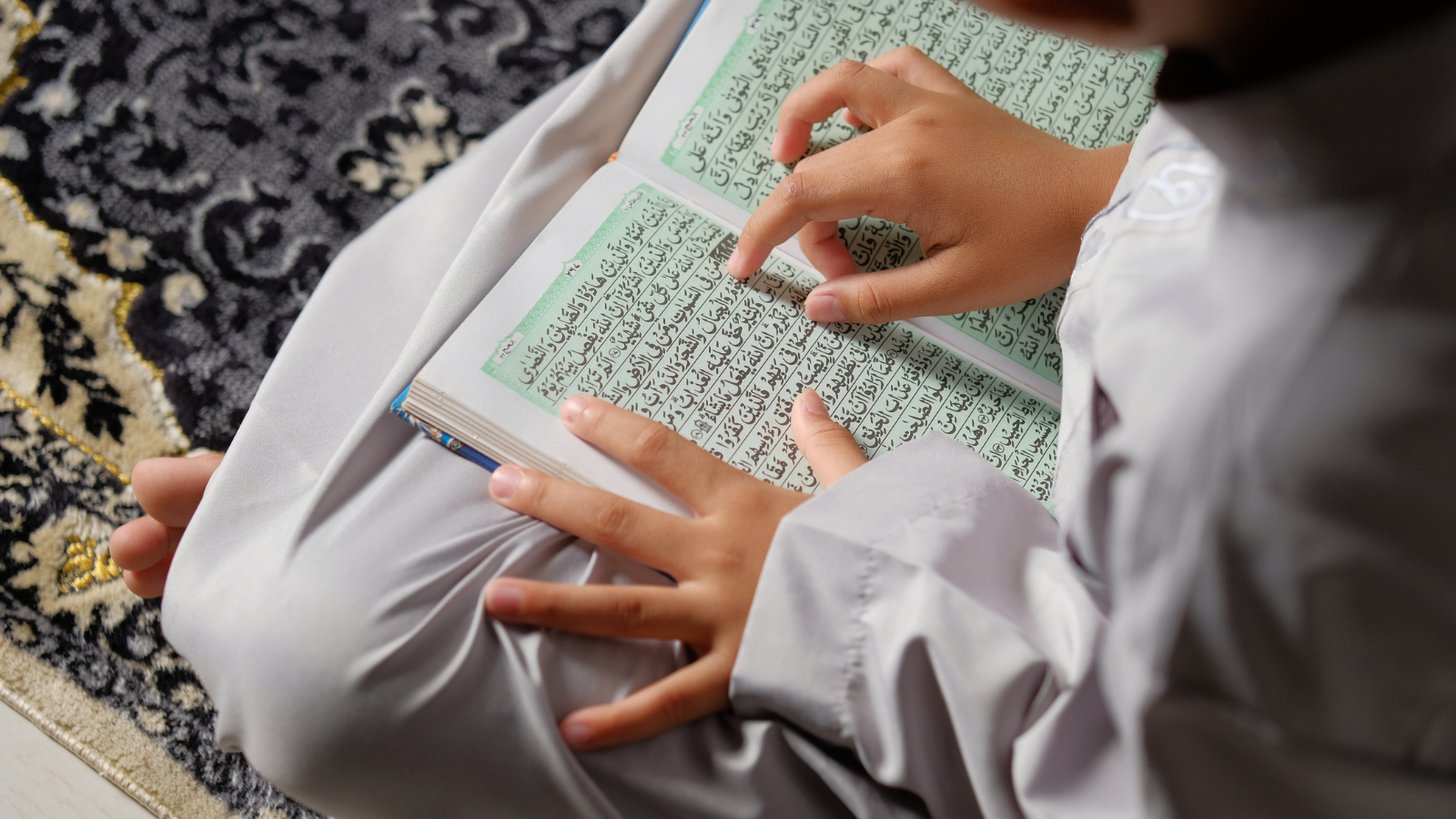
Practical Deen for Busy Muslims
A lot of Muslims do not need another reminder that deen matters. They already know that. What they need is a way to live Islam without feeling like they are constantly failing at a version of religious life that does not fit their reality.
Because for many people, life is not calm.
It is work, children, school runs, tiredness, messages, bills, appointments, family obligations, interrupted sleep, emotional overload, and a hundred unfinished things sitting in the background of the day. In that kind of life, even sincere Muslims can start feeling like strong deen belongs to people with more time, more peace, and fewer responsibilities.
That feeling is dangerous, because it makes ordinary Muslims quietly lower their expectations of themselves. Not all at once. Just gradually.
Less Qur'an.
Later salah.
More spiritual delay.
Less care with halal choices.
Less du'a.
Less inner attention.
More “I’ll fix it when life calms down.”
But for many adults, life does not calm down. At least not for long.
So the real question is not how to become an idealized hyper-productive Muslim with a perfect schedule. The real question is:
how do you keep deen alive when life is full?
That is what practical deen is for.
Deen becomes fragile when it depends only on free time
This is one of the biggest problems busy Muslims face.
A lot of people try to practice Islam only in the leftover parts of the day:
- after work
- after the kids sleep
- after the errands
- after the stress
- after they feel mentally clear
- after they stop being tired
That sounds reasonable, but it often fails because the leftovers of the day are usually the weakest parts of the day.
If your deen only lives in your spare energy, your deen will weaken the moment life becomes crowded.
This is why busy Muslims need a different model.
Not “do more when possible.”
But “protect the essentials even when life is not ideal.”
Strong deen does not always look dramatic
A lot of modern Muslims secretly compare themselves to impossible standards.
They imagine strong deen as:
- long daily Qur'an sessions
- constant spiritual focus
- perfect calm in every salah
- endless voluntary acts
- no inconsistency
- no tiredness
- no struggle with dunya
But practical deen often looks much smaller and much steadier than that.
Sometimes strong deen looks like:
- protecting your five prayers on a chaotic day
- saying no to a haram financial shortcut
- reading a few ayat instead of none
- making du'a in the car
- refusing to normalize what is clearly wrong
- keeping your home Muslim even when the world outside is not
- starting again quickly after a weak week
That kind of deen is not small. It is survival with sincerity.
The goal is not to do everything. The goal is to stop letting the essentials collapse
A lot of spiritual frustration comes from trying to improve ten areas at once.
A much healthier approach is to ask:
what are the things that keep my life recognizably Muslim even when I am busy?
Usually, those are:
- salah
- halal income and halal consumption
- some Qur'an connection
- some dhikr and du'a
- Muslim atmosphere at home
- protection from obvious sins
- regular tawbah and return
If those remain alive, your deen is still breathing.
And once deen is breathing, it can grow.
Start with salah, not because it is basic, but because it organizes everything else
For busy Muslims, salah is not just another good habit. It is the structure that stops the whole day from becoming spiritually shapeless.
When salah weakens, everything else usually becomes harder:
- Qur'an becomes irregular
- dhikr becomes rare
- sin becomes easier
- guilt becomes heavier
- the heart becomes more reactive and less anchored
That is why busy Muslims often do best by treating salah as the first fixed point of practical deen.
Not:
- “I’ll pray when the day clears up”
But:
- “the day must move around the prayer windows”
Even if imperfectly.
Even if sometimes under pressure.
Even if some prayers feel more emotional than others.
A protected salah routine carries more weight than many people realize.
Qur'an for busy Muslims should be built for continuity, not guilt
One of the biggest mistakes busy Muslims make is tying Qur'an only to ideal conditions.
They tell themselves:
- I need proper quiet
- I need a long session
- I need a fresh mind
- I need to be fully focused
- I need time to sit properly
Then days pass.
A more useful rule is:
smaller Qur'an with continuity is better than ambitious Qur'an with long gaps
That can mean:
- one page daily
- a few ayat after Fajr
- listening during driving
- reading from the phone while waiting
- a short nightly recitation instead of nothing
Busy Muslims often need a Qur'an system that survives real life, not a Qur'an fantasy that collapses under real life.
Dhikr is one of the most underused tools for overloaded Muslims
People often underestimate dhikr because it looks small.
But for a busy Muslim, dhikr is powerful precisely because it travels well through a crowded life.
It fits into:
- walking
- driving
- cooking
- waiting
- cleaning
- transitions between tasks
- moments of stress
- moments of anger
- moments of fear
Busy Muslims may not always be able to sit for long reflection. But many can still say:
- SubhanAllah
- Alhamdulillah
- Allahu Akbar
- Astaghfirullah
- La ilaha illa Allah
- salawat upon the Prophet ﷺ
- short personal du'as throughout the day
This turns ordinary movement back into spiritual life.
Busy Muslims need fewer spiritual fantasies and more spiritual defaults
The best practical deen systems are not built around inspiration. They are built around defaults.
A default is what happens without a big inner negotiation.
Examples:
- prayer app alerts are already on
- wudu is renewed before a busy outing
- one mushaf or Qur'an app is always easy to reach
- one reliable halal grocery system is already built
- one short dhikr routine is tied to commuting
- one Islamic lecture or reminder belongs to the week by default
- one charity habit happens automatically each month
- one family Islamic moment is part of the home rhythm
This matters because busy people do not fail only from lack of love for deen. They often fail from having to rebuild everything from zero every day.
Halal living is part of practical deen, not a separate category
A lot of Muslims treat personal worship and halal lifestyle as if they are unrelated.
But practical deen includes:
- what you eat
- what you buy
- how you earn
- what contracts you accept
- what entertainment you normalize
- what you wear
- what you let into your home
- what you excuse for the sake of convenience
For busy Muslims especially, small repeated compromises often do more damage than one major dramatic sin.
That is why practical deen often includes boring but important things:
- reading ingredients
- declining doubtful money
- choosing simpler food when labels are unclear
- being careful with financial products
- refusing to turn haram into “just normal life”
This is not separate from spirituality. It is spirituality in daily form.
Your home should carry some of your deen for you
Busy Muslims cannot rely only on private inner willpower. Environment matters.
If your home is spiritually neutral, then every act of deen has to fight harder to survive.
But if your home naturally includes:
- visible prayer
- Qur'an sound
- du'a language
- halal standards
- Islamic reminders
- modesty norms
- Ramadan and Eid atmosphere
- children seeing deen lived
then your environment starts supporting your religion instead of draining it.
This matters especially for families, but it matters for anyone living a full life. Your home should reduce spiritual friction, not increase it.
One of the most important skills: recovering quickly
Busy Muslims will have weak days.
There will be:
- delayed prayers
- lazy weeks
- distracted salah
- days of low Qur'an
- bad moods
- spiritual dips
- periods where dunya feels louder than the akhirah
That is not unusual.
The real danger is not one weak day. The real danger is slow recovery.
A Muslim with practical deen learns how to return quickly:
- make tawbah
- stop dramatizing the failure
- restart at the next prayer
- restore one good habit immediately
- do not wait for a new week, a new month, or Ramadan to begin again
Fast recovery is one of the clearest signs of living deen practically.
A useful question for every busy Muslim
When life gets heavy, stop asking:
what would the ideal Muslim version of me do today?
Ask:
what is the most faithful version of today that is realistically possible?
That question is much healthier.
Because some days the answer will be:
- full focus
- strong routine
- extra worship
- spiritual clarity
And some days the answer will be:
- protect the prayers
- avoid the haram
- make dhikr through the stress
- read a little Qur'an
- apologize fast
- do not let the day end empty
That still counts.
That still matters.
That is still deen.
What practical deen can look like in one ordinary day
Not every day will look like this, but this kind of structure helps.
Morning
- Fajr protected
- no phone before prayer if possible
- one short Qur'an touchpoint
- intention for halal and patience before starting the day
During the day
- salah planned, not guessed
- short dhikr through transitions
- halal choices made by default, not only when convenient
- one or two moments of sincere du'a in stress
Evening
- Maghrib and Isha not allowed to disappear into tiredness
- family Islamic atmosphere, even briefly
- astaghfar before sleep
- small Qur'an, reflection, or du'a instead of ending the day spiritually empty
This is not a perfect day.
It is a protected day.
Common traps for busy Muslims
Trap 1: waiting for a calmer life
A lot of people postpone serious deen until a future version of life that may never arrive.
Trap 2: confusing inconsistency with hypocrisy
Struggle is not hypocrisy. Staying in the struggle and returning is part of sincere faith.
Trap 3: building routines that only work on good days
Good systems must survive tiredness, interruptions, and normal life.
Trap 4: letting guilt replace action
Guilt may wake the heart, but if it does not lead to one next good step, it becomes spiritually heavy without benefit.
Trap 5: separating daily worship from daily ethics
Salah without halal caution, or Qur'an without financial honesty, does not create a complete Muslim life.
Build your deen around what repeats
If you want practical deen, build around repeated things:
- repeated prayers
- repeated food choices
- repeated speech
- repeated money decisions
- repeated family habits
- repeated morning and evening rhythms
- repeated responses to stress
That is where real character forms.
Not only in Ramadan.
Not only after Islamic lectures.
Not only during emotional highs.
But in repetition.
A practical reset for overwhelmed Muslims
-
Protect the five prayers first.
Even before adding extra habits. -
Choose one Qur'an routine small enough to survive your real life.
-
Add a portable dhikr habit into movement-heavy parts of the day.
-
Fix one area of halal living that keeps getting ignored.
Food, money, contracts, ingredients, entertainment, whatever is weakest. -
Make your home more visibly Muslim in one practical way.
-
When you slip, restart at the next prayer, not next month.
FAQ
How can busy Muslims stay connected to deen?
By building small stable systems instead of waiting for ideal spiritual conditions. The essentials should be protected even on crowded days.
What matters most first?
Usually:
- salah
- halal living
- some Qur'an continuity
- some daily dhikr
- quick tawbah and recovery
Is small worship still meaningful?
Yes. Small worship done consistently often protects deen far better than rare intense bursts followed by long gaps.
What if I keep falling behind?
Then focus less on guilt and more on recovery. Restart quickly and reduce the friction that keeps making you fall behind.
Can practical deen still be strong deen?
Yes. Strong deen is not always dramatic. Often it looks like steady obedience under imperfect conditions.
What is the best mindset for overwhelmed Muslims?
Do not ask for the perfect day. Ask what faithfulness looks like today, inside the life you actually have.
Keep Learning
If this guide helped, you may also want to read:
- How to Stay Consistent with Salah During Busy Days
- How to Build a Practical Muslim Lifestyle Abroad
- Practical Deen for Busy Muslims
- Difference Between Halal, Haram, and Mashbooh
These guides help build a calmer Muslim lifestyle system in ordinary life, not only in ideal moments.
Final CTA
Busy life does not cancel deen.
What matters is building a form of Islam that can survive tiredness, responsibility, and imperfect days — and then returning to it again and again until it becomes the shape of your life.
Related Halal Checks
Curious about specific products? Check their halal status:
Is Ice Cream Halal?
DOUBTFULPlain dairy ice cream is halal, but gelatin, animal emulsifiers, carmine and alcohol-based vanilla extract make many commercial flavours doubtful.
Is Doritos (Nacho Cheese) Halal?
DOUBTFULIt depends on the country. US Nacho Cheese Doritos contain animal enzymes; UK and EU versions use microbial ones, and some markets are certified.
Is Skittles Halal?
HALALSkittles no longer contain gelatin or carmine and are made from plant-based ingredients. The original sweets are halal; Skittles Gummies are not.
Keep learning
If this guide helped, you may also want to read:
A Realistic Muslim Routine for Busy Parents
A grounded guide for busy Muslim parents who want more deen in real family life, with simple routines for salah, Qur'an, children, home atmosphere, and staying spiritually steady without unrealistic pressure.
How to Explain Halal Food Rules to Non-Muslim Friends
A practical guide to explaining halal food rules to non-Muslim friends in a calm, clear way, without making the conversation awkward, defensive, or overly technical.
Halal vs Tayyib: Are They the Same?
A clear guide to the difference between halal and tayyib, including why something can be technically halal but still not the best choice, and how Muslim consumers can think about both more wisely.
Simple Islamic Habits for Young Children
A practical guide to small Islamic habits that fit naturally into early childhood, helping Muslim parents build love, familiarity, and daily connection to Allah without turning Islam into pressure.