Simple Islamic Habits for Young Children
A practical guide to small Islamic habits that fit naturally into early childhood, helping Muslim parents build love, familiarity, and daily connection to Allah without turning Islam into pressure.
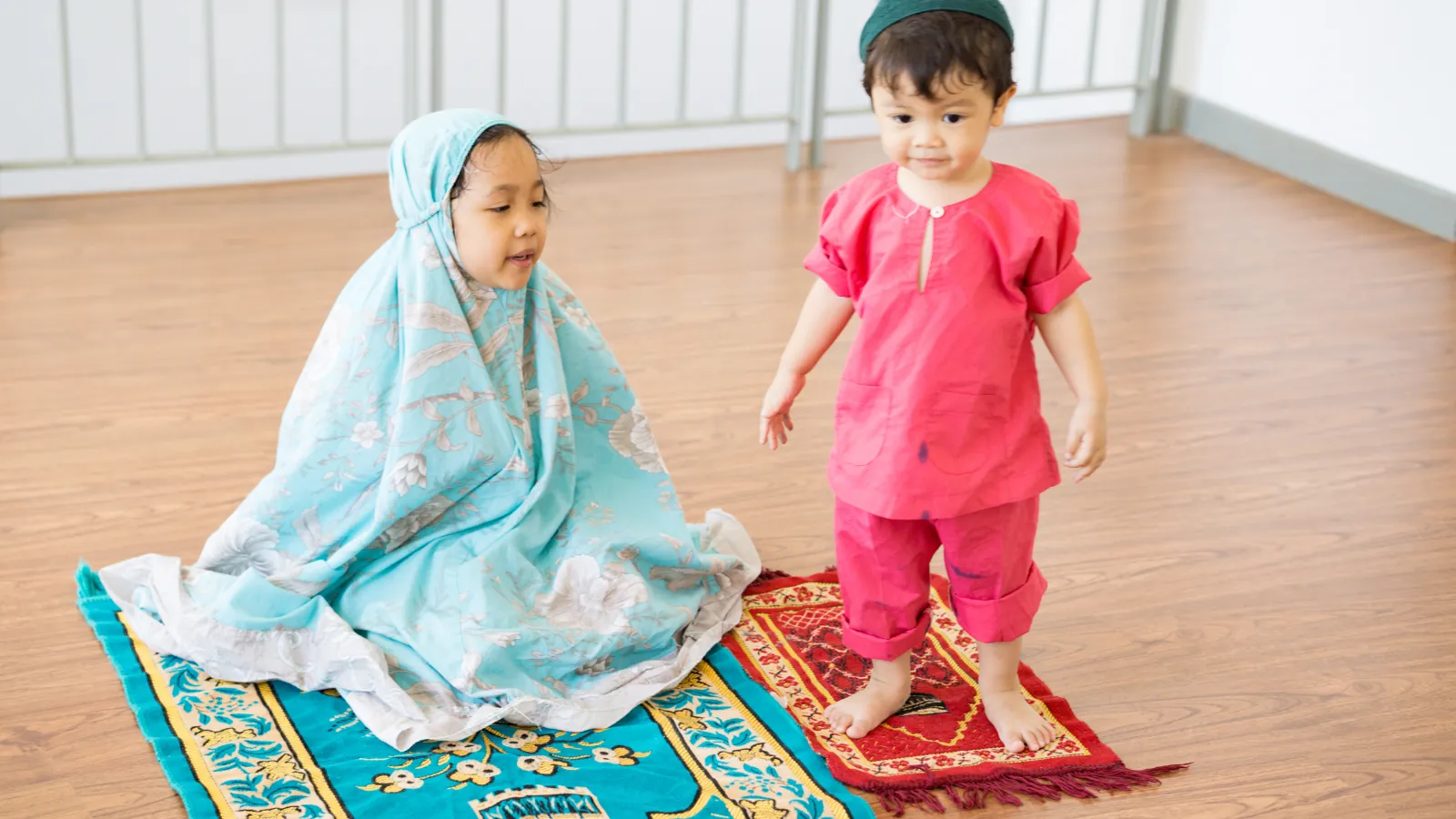
Simple Islamic Habits for Young Children
Young children do not learn Islam the way adults do.
They do not build faith through long explanations, serious lectures, or perfectly structured lessons. They learn through repetition, tone, atmosphere, and what keeps happening around them.
That is why the best Islamic habits for little children are usually very small.
Not heavy.
Not formal.
Not exhausting.
Just small things that happen so often they start feeling normal.
That is the real goal in the early years: not raising a child who can explain everything, but raising a child for whom Islam already feels familiar, warm, and part of daily life.
Start with habits, not pressure
A lot of parents become tense too early.
They want the child to:
- sit properly
- memorize quickly
- answer correctly
- listen fully
- take every reminder seriously
But very young children usually do much better with habits than expectations.
A habit says:
- this is what we do before eating
- this is what we say before sleeping
- this is what we hear when we leave the house
- this is what happens when prayer time comes
That is easier for a child to hold.
The early years are less about correction and more about planting.
The best habits are attached to things that already happen every day
This is the secret.
If you try to build Islam only through “special moments,” it becomes harder to keep. But if you attach Islamic habits to things already happening every day, they become much more natural.
The strongest places to attach them are:
- waking up
- eating
- leaving the house
- getting in the car
- seeing something beautiful
- making a mistake
- feeling scared
- bedtime
- prayer time
That is why simple habits work so well. They ride on the back of ordinary life.
1. Bismillah before eating
This is one of the easiest and strongest habits.
It is short. It repeats daily. It connects a child to Allah in a simple, direct way. And because food happens every day, the habit gets reinforced without needing a formal lesson.
Do not turn it into a speech.
Just say it, gently and often:
- before meals
- before snacks
- before drinks
Children usually learn these things first by hearing, then by copying.
2. Alhamdulillah after eating or when something good happens
This habit helps children connect goodness with gratitude.
That can sound like:
- alhamdulillah after food
- alhamdulillah when they feel better
- alhamdulillah when they get home safely
- alhamdulillah when something makes them happy
This matters because it teaches children that Islam is not only about rules. It is also about noticing blessings.
That feeling matters a lot.
3. Short bedtime du'as
Bedtime is one of the best places to build Islamic memory.
Children are softer then. The day is closing. Repetition is easier. Even one very short du'a said every night can shape a child deeply over time.
Keep it light.
Do not aim for a full lesson every night. A short, repeated bedtime moment is much stronger than a beautiful routine that disappears after three days.
For small children, consistency matters more than quantity.
4. Hearing the adhan and knowing prayer matters
A young child does not need to understand all the rulings of salah to start feeling that prayer is important.
What they need is to notice:
- something changes when prayer time comes
- мама or папа stops for salah
- prayer mats come out
- wudu happens
- the home becomes a little different
This is one of the most powerful Islamic habits for children, because it teaches without needing too many words.
A child who grows up seeing prayer usually carries it differently from a child who only hears that prayer is important.
5. Saying astaghfirullah after mistakes
This is such a beautiful early habit because it teaches two things at once:
- mistakes happen
- returning to Allah is normal
Children should not grow up feeling that Islam only appears when they are being scolded. But they should grow up hearing that when something goes wrong, we return, we say astaghfirullah, we try again.
That makes deen feel alive and merciful.
6. Du'a before leaving the house or getting in the car
Travel habits are very easy for children to remember because movement makes them noticeable.
A simple leaving-the-house du'a or car du'a builds a strong connection between safety and Allah.
Even if the child cannot say all the words at first, hearing the du'a every day matters. Repetition builds familiarity long before full understanding.
That is how many strong habits begin.
7. Loving Islamic words before fully understanding them
A lot of parents worry because the child says:
- bismillah
- alhamdulillah
- inshaAllah
- astaghfirullah
without fully understanding them.
That is normal.
Early childhood is exactly the stage where children can love and repeat sacred language before they can explain it properly. That is not fake learning. That is how language enters the heart.
Let the child hear these words often in calm, loving contexts. Meaning can deepen later.
8. A tiny Qur'an habit
Do not make the mistake of thinking Qur'an only counts if the child sits formally and behaves perfectly.
For very young children, a Qur'an habit may simply be:
- hearing Qur'an in the car
- hearing a short surah before sleep
- repeating one short ayah
- listening to the same reciter often enough to feel familiar
- holding their own mushaf or Qur'an book with affection and respect
The early goal is not mastery.
The early goal is closeness.
9. Salām in the home
This is one of the easiest habits and one of the warmest.
A child who hears salām regularly in the house starts to connect Islam with affection, welcome, and family warmth.
That can be:
- salām when waking up
- salām when entering
- salām between family members
- helping the child say salām to grandparents or visitors
This is a small habit with a very strong emotional effect.
10. Islamic habits through imitation, not constant instruction
Young children copy more than they analyze.
That is why these things matter so much:
- they see you pray
- they hear you say bismillah
- they watch you make du'a
- they hear you thank Allah
- they hear you say astaghfirullah after small mistakes
- they see that Islam is not only for the masjid or Ramadan
For little children, imitation is one of the strongest forms of education.
So if you want the child to build Islamic habits, let them see Islam lived in small, repeated ways.
The habits should feel light, not tense
This is very important.
If every Islamic habit comes with:
- pressure
- irritation
- shouting
- constant correction
- impossible expectations
then the child may learn the habit, but not love it.
A much healthier early approach is:
- repeat gently
- keep it warm
- celebrate small attempts
- let the child join before the child performs perfectly
The feeling around the habit matters.
A child may forget the exact wording at first, but they will remember whether Islam felt soft or stressful.
What usually works best for young children
The best habits are usually:
- short
- repeated
- connected to daily life
- emotionally warm
- easy to imitate
- not overloaded with explanation
That means habits often work better than lessons.
And one strong habit repeated every day is usually more powerful than five scattered reminders that nobody keeps.
What parents often get wrong
Mistake 1: trying to teach too much at once
That usually creates resistance.
Mistake 2: correcting every detail
Young children need warmth and repetition more than perfection.
Mistake 3: making Islam feel like a performance
The goal is familiarity and love, not looking impressive.
Mistake 4: waiting until the child is older
The early years are exactly when soft habits can settle most naturally.
Mistake 5: separating Islam from ordinary life
For children, the strongest Islam is the Islam woven into meals, sleep, travel, mistakes, gratitude, and home life.
If you only choose five habits, choose these
For many families, the easiest five are:
- Bismillah before eating
- Alhamdulillah after blessings or food
- A short bedtime du'a
- Seeing salah as a normal part of home life
- Hearing salām regularly
Those five alone can begin shaping a child’s Islamic world very early.
A simple family rhythm for small children
-
Attach Islamic words to daily moments already happening.
-
Keep the habits very short.
Short habits survive. Long routines often disappear. -
Let the child imitate before expecting perfect understanding.
-
Make prayer visible in the home.
-
Use warmth more than pressure.
-
Repeat the same small things until they feel normal.
FAQ
What Islamic habits should young children learn first?
Usually the easiest first habits are:
- bismillah before eating
- alhamdulillah after blessings
- short bedtime du'as
- salām
- seeing prayer as normal in the home
At what age should children start learning Islamic habits?
Very early, but in a soft and natural way. Young children can begin by hearing, copying, and joining in before they fully understand.
Should I teach du'as or Qur'an first?
For very small children, both can be introduced lightly. The key is not which one comes first, but that the child hears Islamic words often and in a loving environment.
What if my child keeps forgetting?
That is normal. The answer is not pressure. It is repetition.
How do I make Islamic habits easier for children?
Attach them to daily life, keep them short, repeat them often, and make the emotional tone gentle.
Keep Learning
If this guide helped, you may also want to read:
Final thought
Young children do not need a heavy version of Islam.
They need an Islam that is heard often, seen often, felt warmly, and repeated so gently that one day it simply becomes part of who they are.
That is how small habits become deep roots.
Related Halal Checks
Curious about specific products? Check their halal status:
Is Ice Cream Halal?
DOUBTFULPlain dairy ice cream is halal, but gelatin, animal emulsifiers, carmine and alcohol-based vanilla extract make many commercial flavours doubtful.
Is Doritos (Nacho Cheese) Halal?
DOUBTFULIt depends on the country. US Nacho Cheese Doritos contain animal enzymes; UK and EU versions use microbial ones, and some markets are certified.
Is Skittles Halal?
HALALSkittles no longer contain gelatin or carmine and are made from plant-based ingredients. The original sweets are halal; Skittles Gummies are not.
Keep learning
If this guide helped, you may also want to read:
What Breaks Wudu?
A simple guide to what breaks wudu, including the nullifiers most Muslims agree on, where the madhhabs differ, and how to stop turning every small doubt into stress.
Muslim Family Routines That Make Daily Life Easier
A grounded guide to Muslim family routines that reduce chaos, protect deen, and make ordinary days feel calmer, more organized, and more connected to Allah.
A Realistic Muslim Routine for Busy Parents
A grounded guide for busy Muslim parents who want more deen in real family life, with simple routines for salah, Qur'an, children, home atmosphere, and staying spiritually steady without unrealistic pressure.
Halal vs Tayyib: Are They the Same?
A clear guide to the difference between halal and tayyib, including why something can be technically halal but still not the best choice, and how Muslim consumers can think about both more wisely.