Are E Numbers Halal? A Practical Guide for Muslims
A practical guide to E numbers for Muslim consumers. Learn what E numbers mean, which ones are usually halal, which are doubtful, and how to check them wisely.
Are E Numbers Halal? A Practical Guide for Muslims
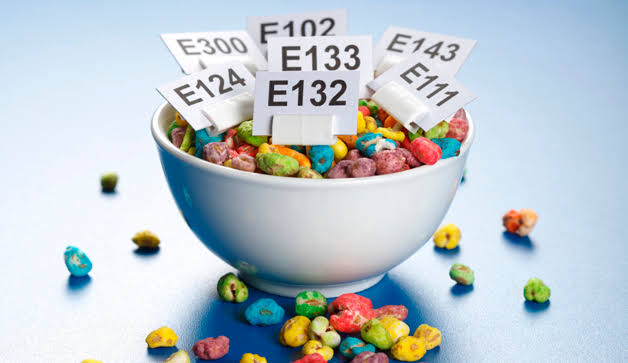
You pick up a snack, drink, yogurt, or dessert and see ingredients like E120, E322, E471, or E904. For many Muslims, those short codes feel confusing and suspicious. If you do not already know what they mean, it is easy to assume they are all doubtful.
But that is not the right way to read them. E numbers are not a secret sign that food is haram. They are EU-style codes for approved food additives. The real halal question is usually not the code itself, but the source, function, and sometimes the scholarly treatment of the additive behind it.
This guide explains what E numbers are, why some are clearly fine, why some are clearly problematic, why others are source-dependent, and how Muslims can check them without turning every shopping trip into anxiety.
Quick Answer
Most E numbers are not automatically a halal problem.
The most practical way to think about them is this:
- Many E numbers are usually halal, especially when they are plant-derived, mineral-based, or clearly synthetic in a way that does not raise a source issue.
- Some E numbers are clearly problematic, such as additives known to come from insects or other non-halal sources.
- Some E numbers are source-dependent, meaning they may be halal or not depending on whether they come from plant, animal, or other sources.
- Halal certification is often the fastest and strongest shortcut when the label alone does not give enough detail.
Official UK and EU sources explain that E numbers identify additives that are permitted and safety-assessed for use in food. That tells you something about regulatory approval, but not automatically about halal status.
Why This Matters
The E-number issue matters because it sits at the intersection of three different questions:
- Is the additive approved and safe for food use?
- What is the additive actually made from?
- How do halal certifiers and scholars treat that source?
These are not the same question.
EFSA explains that an E number means the additive has passed safety tests and been approved for use in the EU. The UK Food Standards Agency likewise describes E numbers as approved additives used for colors, preservatives, antioxidants, emulsifiers, stabilizers, thickeners, and more. That is useful regulatory information, but it does not settle halal concerns by itself.
This is exactly where many Muslims get stuck. A label may be legally clear for food regulation but still incomplete for halal decision-making.
What E Numbers Actually Mean
An E number is a European code used to identify a permitted food additive. EFSA states that in the EU all food additives are identified by an E number, and that an E number means the additive has passed safety tests and has been approved for use.
The UK Food Standards Agency also explains that approved additives and E numbers cover categories such as:
- colours
- preservatives
- antioxidants
- sweeteners
- emulsifiers
- stabilisers
- thickeners
- other additive types
What this does not mean
An E number does not automatically mean:
- the ingredient is synthetic
- the ingredient is harmful
- the ingredient is halal
- the ingredient is haram
It only tells you that the additive is a recognized, approved additive under the relevant food law.
Are E Numbers Always Synthetic?
No.
This is one of the biggest myths around E numbers. Some additives are synthetic, but many are derived from natural sources. FDA guidance on food ingredients and color additives notes that food additives can be naturally or artificially derived, and FDA materials on color additives explain that some exempt colors come from plant, mineral, or other non-synthetic sources.
That means Muslims should not treat “E number” as a synonym for “artificial” or “chemical in a suspicious way.” The halal issue depends on the specific additive.
A Better Halal Framework for E Numbers
The most useful halal framework is not “all halal” or “all haram.” It is three categories.
1. E numbers that are usually halal
Many additives are usually halal because they are mineral-based, plant-based, or otherwise do not typically raise a source problem. This can include acids, vitamins, some gums, many thickeners, and many stabilizers.
Examples that are often treated as low-halal-risk include things like citric acid-type additives, vitamin C-related additives, and many plant gums. The UK FSA’s approved additives list shows just how broad the range is.
2. E numbers that are clearly problematic
A small number of additives are more straightforwardly concerning from a halal perspective.
The best-known example is carmine / cochineal extract, which FDA states is derived from an insect. In the EU/UK additive system, this is associated with E120.
For many Muslim consumers and many scholars, insect-derived colorants are not treated the same way as ordinary plant-based colors. This is why E120 is regularly flagged in halal discussions.
3. E numbers that are source-dependent
This is the category that causes the most real-life confusion.
Some E numbers may come from plant or animal sources, or may require more source detail than the label gives. Examples often discussed by halal shoppers include:
- E471 (mono- and diglycerides of fatty acids)
- E472 family additives
- E422 (glycerol / glycerin) in some contexts
- certain stearate-related ingredients in broader labeling contexts
IFANCA’s halal shopper guidance repeatedly flags mono/diglycerides, glycerin, flavors, gelatin, and similar ingredients as items that may need checking.
The E Numbers Muslims Most Often Ask About
You do not need a list of hundreds of additives memorized. In practice, only a smaller group comes up again and again in halal shopping.
E120 — Carmine / cochineal
FDA states that cochineal extract and carmine are derived from an insect. This is one of the clearest examples of an E number that raises a direct source concern for Muslim consumers.
E471 — Mono- and diglycerides of fatty acids
This is one of the most discussed additives because it can be derived from different fat sources. The halal issue is not the additive name itself, but whether the source is plant-based or animal-based. IFANCA’s halal shopper guide lists mono/diglycerides as a repeated point of caution in many common foods.
E904 — Shellac
The UK FSA lists E904 as shellac. FDA’s food substance database lists purified shellac with names such as confectioner’s glaze and candy glaze. This is another additive that often makes Muslims pause because of its source history and use in coatings and glazes.
E322 — Lecithins
Not every commonly asked E number is a major halal problem. Lecithins are often soy- or egg-related in food use, which shows why it is a mistake to assume that every E number is equally doubtful.
Why Safety Approval Is Not the Same as Halal Status
This distinction is crucial.
EFSA and the UK FSA are answering a food safety question: can this additive be lawfully and safely used in food under the rules?
Halal certifiers and Muslim consumers are asking a different question: is the source and production context religiously acceptable?
Those are different layers. An additive can be fully approved for food use and still be doubtful or unacceptable for halal purposes if its source is problematic. Conversely, an additive can be unfamiliar and sound “chemical” while not actually posing much halal concern at all.
How to Check E Numbers in Real Life
The best approach is practical and repeatable.
-
Check for halal certification first.
If a product is halal-certified by a credible body, that is usually the clearest answer. -
Do not panic at the letter E.
An E number only tells you the product contains an approved additive. It does not tell you the halal ruling by itself. -
Look for the specific additive name if available.
Labels may show the number, the name, or both. EFSA’s consumer-facing guidance notes that additives appear in ingredient lists and may be identified by function and either name or E number. -
Watch for the repeat-problem additives.
Focus especially on the ones that are known to raise source questions, such as E120, E471, and some glaze or glycerin-related ingredients. -
Use product context.
A candy glaze, gelatin sweet, or processed bakery item is more likely to raise additive questions than plain oats or tomato paste. -
Verify unclear products or choose clearer alternatives.
If the label gives too little information, either contact the manufacturer or choose a certified option.
A Practical Reference Table
| E number | Name | Main halal concern | Practical note |
|---|---|---|---|
| E120 | Carmine / cochineal | Insect-derived source | Often treated as problematic |
| E471 | Mono- and diglycerides | Plant or animal source can vary | Check source or certification |
| E904 | Shellac | Source and coating context raise questions | Check product and certifier guidance |
| E322 | Lecithins | Usually lower-risk in common food use | Still review product context |
| E422 | Glycerol / glycerin | Source can vary in some contexts | Verify if needed |
| E300 | Ascorbic acid | Generally low halal concern | Usually not a major issue |
This table is not a fatwa list. It is a practical shopping framework.
Quick tip: Want a faster way to review ingredients while shopping? The AllHalal app helps you check products and halal-related details more easily.
Common Mistakes
These are the mistakes Muslim shoppers make most often around E numbers.
- assuming every E number is haram
- assuming every E number is synthetic
- confusing safety approval with halal approval
- memorizing giant unsourced lists without understanding source categories
- focusing on the code but ignoring halal certification
- checking only one additive instead of the whole product
A better approach is simpler. Learn the small group of additives that most often matter, understand the difference between safety and source, and use certification where possible.
Scholarly Views and Practical Limits
This topic does not usually revolve around deep disagreement over every single E number. More often, the real issue is whether the additive’s source is clear and whether the product has trustworthy halal certification.
What is broadly clear
- An E number by itself is not proof that something is haram.
- Additives from clearly problematic sources still remain problematic even if they are legally approved for food use.
- Additives from lawful or low-risk sources are often not a major halal issue.
- Source-dependent additives should be verified rather than guessed.
Where differences can appear
Differences tend to appear around:
- source-unclear additives
- additives derived from doubtful or mixed sources
- how strictly one treats certain transformed or processed ingredients
- whether local certifier standards are stricter or more flexible
That is why the most practical rule is to prefer halal-certified products when possible and to verify repeated problem additives rather than trying to memorize endless internet lists.
Important: This article is not a fatwa. It is a practical consumer guide. For disputed ingredient questions in your madhhab or local context, consult a qualified scholar or trusted halal authority.
FAQ
Are all E numbers halal?
No. Many are usually fine, some are clearly problematic, and some depend on source. Treating them all the same is inaccurate.
Are E numbers always artificial?
No. Some come from natural sources, and some are synthetic. “E number” does not mean “artificial” by definition.
Does an E number mean the product is safe?
In the EU context, it means the additive is an approved additive that has undergone safety assessment for permitted use. That is a regulatory safety point, not a halal ruling.
Is E120 halal?
E120 is associated with carmine / cochineal, and FDA states carmine is derived from an insect. Many Muslims therefore avoid it.
Is E471 halal?
It depends on the source. Mono- and diglycerides may come from different fat sources, which is why they are often treated as source-dependent and worth checking.
What should I do if I see an unfamiliar E number?
Do not assume the worst. Check whether the product is halal-certified, identify the additive, and focus on whether it is a known source-dependent or problematic additive. If needed, verify the source.
Key Takeaways
- E numbers are codes for approved food additives in the EU system, not automatic signs of haram food.
- Safety approval and halal status are different questions.
- Many E numbers are usually low-risk for halal concerns.
- A smaller group matters more in practice, especially E120, E471, and sometimes E904.
- The most practical shopping method is to look for halal certification, then focus on source-dependent additives.
- When a product stays unclear, you should verify the source or choose a clearer alternative.
Keep Learning
If this guide helped, you may also want to read:
- How to Read Ingredient Labels for Halal
- Is E471 Halal?
- What Is Halal Certification?
- What Makes an Ingredient Mashbooh?
These guides will help you move from worrying about codes to making more confident halal decisions in real shopping situations.
Final CTA
You do not need to memorize every E number to shop more confidently.
Learn the few that matter most, rely on halal certification where possible, and use AllHalal.info to build a calmer, smarter system for everyday choices.
Related Halal Checks
Curious about specific products? Check their halal status:
Is Gelatin Halal?
DOUBTFULGelatin takes the ruling of the animal it came from. Pork gelatin is haram, fish gelatin is halal, and beef gelatin depends on how the animal was slaughtered.
Is E428 (Gelatin) Halal?
HARAME428 is gelatin. Unless the pack states halal bovine or fish gelatin, treat it as non-halal (often porcine).
Is Swedish Fish Halal?
DOUBTFULSwedish Fish are usually starch-based (no gelatin) in major markets, but confirm on your pack and watch colours.
Keep learning
If this guide helped, you may also want to read:
Is Ashwagandha Halal?
A practical guide to ashwagandha for Muslim consumers, including why the herb itself is usually not the hardest halal issue, and why capsules, gummies, and inactive ingredients often matter more.
Are Emulsifiers Halal?
A practical guide to emulsifiers for Muslim consumers, including what emulsifiers actually are, which ones are usually easier, which ones often become mashbooh, and how to read labels more calmly.
10 Hidden Non-Halal Ingredients in Everyday Food
A practical guide to 10 hidden non-halal or mashbooh ingredients Muslims often miss in candy, bread, cheese, desserts, supplements, and processed foods.
Are Mushroom Supplements Halal?
A practical guide to mushroom supplements for Muslim consumers, including why the mushroom itself is usually not the hardest halal issue, and why capsules, gummies, and inactive ingredients often matter more.