Is Whey Halal?
A practical guide to whey for Muslim consumers. Learn what whey is, when it is halal or doubtful, and how to check dairy products and labels more wisely.
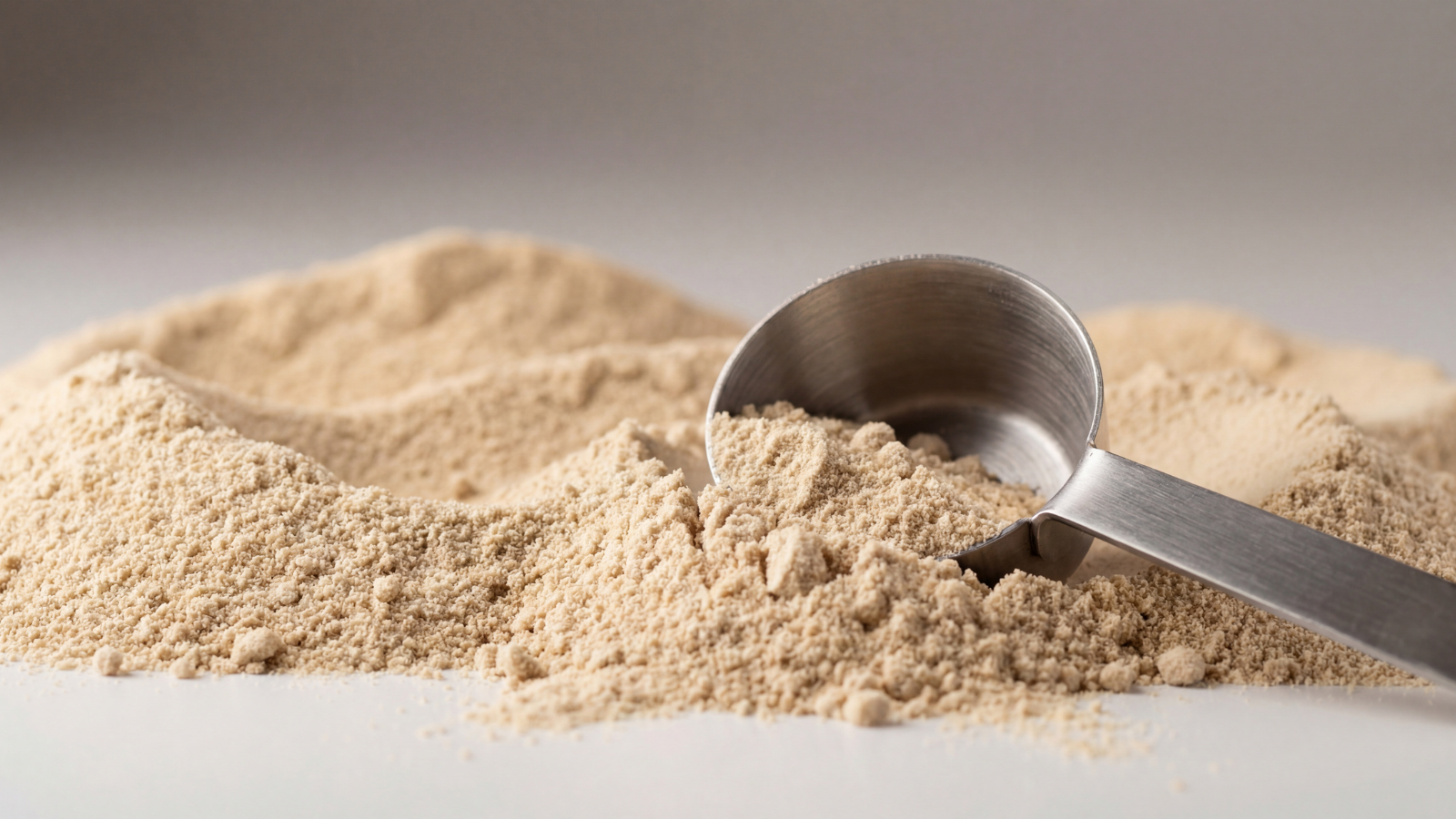
Is Whey Halal?
You read a label on chocolate, chips, protein powder, or a dessert and notice one dairy ingredient that seems familiar but still unclear: whey. It sounds simple. It comes from milk. So is it automatically halal?
Not always. Whey is milk-derived, and FDA documents describe sweet whey as a byproduct of cheesemaking. That sounds reassuring at first, but it also points to the real halal question: if whey comes from cheese production, then the type of cheese-making process behind it can matter. oai_citation:0‡U.S. Food and Drug Administration
This guide explains what whey is, why it is often fine, why it can still become mashbooh in some products, and how Muslims can check it without overcomplicating every dairy label.
Quick Answer
Whey is not automatically haram, and in many ordinary cases it may be practically acceptable. But it is also not automatically simple in every case.
The practical rule is:
- whey is a milk-derived ingredient oai_citation:1‡U.S. Food and Drug Administration
- FDA documents describe sweet whey as a byproduct of cheesemaking oai_citation:2‡U.S. Food and Drug Administration
- if the whey comes from a cheese process involving unclear enzymes or rennet, some Muslims treat it as doubtful
- IFANCA’s shopper guide flags whey in products like candy and ice cream as a mashbooh ingredient worth checking in context oai_citation:3‡IFANCA
- halal certification is usually the easiest shortcut when the dairy process behind the whey is not clear
So the most accurate short answer is this: whey is mainly a dairy-processing question, not just a milk question.
Why This Matters
Whey shows up in products that many people do not immediately think of as “cheese-related.”
You may find it in:
- chips and savory snacks
- chocolate and candy
- protein powders
- ice cream
- desserts
- bakery products
IFANCA’s Halal Shopper’s Quick Reference Guide specifically flags whey in candy and ice cream as a doubtful ingredient category worth checking. That does not mean whey is always non-halal. It means the ingredient can raise halal questions depending on its production context. oai_citation:4‡IFANCA
This is why the issue matters. A Muslim consumer may see only a milk ingredient on the label, while the real question sits one step deeper in the dairy process behind it.
What Whey Actually Is
Whey is the liquid portion left behind during certain dairy-processing steps, especially cheesemaking. FDA’s GRAS letter on fractionated whey protein concentrate states that sweet whey is produced from pasteurized fluid milk as a byproduct of cheesemaking. oai_citation:5‡U.S. Food and Drug Administration
That means whey is not a random additive. It is a real dairy ingredient connected to cheese production.
In practical terms, whey may appear as:
- whey
- whey powder
- sweet whey
- whey protein concentrate
- whey protein isolate
It is also important to remember that whey is a milk-derived ingredient, so allergen-labeling rules require milk to be declared on food labels when whey is used as an ingredient. FDA’s allergen guidance confirms that milk is a major allergen and must be identified by its food source. oai_citation:6‡U.S. Food and Drug Administration
Why Whey Is Not Always a Simple Halal Ingredient
This is where many shoppers get confused.
If you only look at the word “milk,” whey may sound automatically fine. But whey is often connected to cheesemaking, and cheesemaking may involve rennet or other enzymes. FDA’s documents explicitly connect sweet whey to cheesemaking, which is why some halal-conscious consumers do not treat whey as a purely standalone milk ingredient. oai_citation:7‡U.S. Food and Drug Administration
That does not mean all whey is doubtful.
It means the halal question may depend on:
- how the whey was produced
- whether cheese-making enzymes were involved
- whether the product is halal-certified
- whether the overall product contains other doubtful ingredients too
When Whey Is Usually Less Concerning
Some situations are much easier than others.
Whey is usually less concerning when:
- the product is halal-certified
- the product is a simple dairy item with strong manufacturer transparency
- the whey ingredient appears in a product from a trusted halal-compliant brand
- the label and product context do not raise other ingredient concerns
A halal-certified product is especially helpful because it means the manufacturer’s ingredient system has already gone through halal review at a deeper level than the retail label alone shows.
When Whey Needs More Checking
Whey deserves more attention when:
- the product is not halal-certified
- the product contains several other doubtful ingredients
- the product is highly processed
- the product is imported and labeling is vague
- it is a repeat-purchase item and you want stronger confidence
This matters most in categories like:
- candy
- ice cream
- flavored snack foods
- processed desserts
- protein supplements
That is exactly the type of context reflected in IFANCA’s shopper guide, which flags whey in candy and ice cream rather than treating it as an always-simple dairy ingredient. oai_citation:8‡IFANCA
A Better Way to Read Whey on a Label
Instead of asking, “Is whey milk, yes or no?” it is more useful to ask:
- Is this product halal-certified?
- Is this a simple dairy product or a heavily processed one?
- Does the product also contain enzymes, flavors, or other mashbooh ingredients?
- Is this something I buy often enough to verify?
That gives you a more realistic halal-checking system.
Because in real shopping, whey is often not the only ingredient that matters. It is one part of a broader processing and labeling picture.
How to Check Whey in Real Life
Use this method when you see whey on a label.
-
Check for halal certification first.
This is usually the clearest answer. -
Confirm that the product is milk-derived.
Whey is a milk ingredient, and allergen rules usually make that visible on labels. oai_citation:9‡U.S. Food and Drug Administration -
Look at the product category.
Whey in a simple dairy product is different from whey in a highly processed candy or snack. -
Read the full label, not just the whey.
Other ingredients may tell you more about whether the product is straightforward or mashbooh. -
Watch for dairy-processing clues.
Since whey is often tied to cheesemaking, products with vague dairy processing may deserve more attention. -
Verify repeat-purchase products if needed.
If the item matters to you and the label still feels incomplete, contact the manufacturer or choose a clearer alternative.
A Practical Reference Table
| Label situation | What it usually means | Practical halal response |
|---|---|---|
| Halal-certified product with whey | Whey and overall product reviewed under halal standards | Usually the clearest option |
| Simple dairy product with whey | Often lower concern | Usually easier to assess |
| Whey in candy or ice cream | IFANCA flags this category as mashbooh-sensitive | Read more carefully |
| Whey plus vague enzymes/flavors | Source and process uncertainty increases | Verify or choose another product |
| Imported processed food with whey | Label may still leave process questions | Be more careful |
Quick tip: Want a faster way to review ingredients while shopping? The AllHalal app helps you check products and halal-related details more easily.
What This Means for Everyday Shopping
You do not need to treat every product with whey as forbidden.
A better rule is:
- do not panic just because whey comes from cheesemaking
- do not assume every whey-containing product is automatically simple
- use certification, product type, and full-label reading together
- verify repeat-purchase products that matter to you
Good practical shortcuts
- trust credible halal certification
- be more careful with whey in candy, ice cream, and highly processed snacks
- look at the full ingredient system, not whey by itself
- avoid building confidence on guesswork when easy alternatives exist
Common Mistakes
These are the biggest mistakes Muslim consumers make with whey:
- assuming whey is always automatically halal because it comes from milk
- assuming whey is always doubtful because it comes from cheesemaking
- checking only the word “whey” and ignoring the rest of the label
- forgetting that product category matters
- ignoring halal certification when it is available
- treating dairy-processing questions as identical in every product
A better approach is to understand that whey is usually a process question, not a panic word.
FAQ
Is whey halal?
Sometimes yes, and in many ordinary cases it may be practically acceptable. But because FDA describes sweet whey as a byproduct of cheesemaking, some Muslims still want more process clarity in certain products. oai_citation:10‡U.S. Food and Drug Administration
Is whey a milk ingredient?
Yes. FDA allergen guidance makes clear that milk is a major allergen and that ingredients derived from it must be identified by food source. oai_citation:11‡U.S. Food and Drug Administration
Why does whey become doubtful?
Because whey is often connected to cheesemaking, and some Muslims want clarity about the enzyme or rennet process behind it.
Is whey in candy halal?
Not automatically. IFANCA specifically flags whey in candy as a mashbooh ingredient category worth checking. oai_citation:12‡IFANCA
Is whey in ice cream halal?
Not automatically. IFANCA also flags whey in ice cream as a category where more caution may be appropriate. oai_citation:13‡IFANCA
What should I do if the label is unclear?
The most practical answer is to verify the source or process, choose a halal-certified product, or choose a simpler alternative.
Key Takeaways
- Whey is a milk-derived ingredient. oai_citation:14‡U.S. Food and Drug Administration
- FDA describes sweet whey as a byproduct of cheesemaking. oai_citation:15‡U.S. Food and Drug Administration
- The main halal issue is not the word whey itself, but the dairy-processing context behind it.
- IFANCA flags whey in candy and ice cream as mashbooh-sensitive product categories. oai_citation:16‡IFANCA
- Halal certification is usually the clearest shortcut.
- The most practical rule is to read the full label, not just one dairy ingredient, and verify the source when the product stays unclear.
Keep Learning
If this guide helped, you may also want to read:
- Is Rennet Halal?
- Are Enzymes Halal?
- How to Read Ingredient Labels for Halal
- What Makes an Ingredient Mashbooh?
These guides will help you build a smarter dairy-ingredient checking system instead of reacting to one label word in isolation.
Final CTA
The word “whey” does not need to create instant confusion.
What matters is learning when it is simply a routine dairy ingredient, when the cheesemaking process behind it matters more, and when certification gives you the clearest shortcut. Keep exploring ingredient guides on AllHalal.info and use the app when you want quicker support while shopping.
Related Halal Checks
Curious about specific products? Check their halal status:
Is Ice Cream Halal?
DOUBTFULPlain dairy ice cream is halal, but gelatin, animal emulsifiers, carmine and alcohol-based vanilla extract make many commercial flavours doubtful.
Is Doritos (Nacho Cheese) Halal?
DOUBTFULIt depends on the country. US Nacho Cheese Doritos contain animal enzymes; UK and EU versions use microbial ones, and some markets are certified.
Is Whey / Whey Protein Halal?
DOUBTFULWhey is a cheesemaking by-product, so it inherits the ruling of the rennet used. Microbial rennet makes it halal; animal rennet leaves it doubtful.
Keep learning
If this guide helped, you may also want to read:
What Muslims Should Always Check in Candy
A practical guide to the ingredients that make candy tricky for Muslims, including gelatin, glycerin, flavorings, coatings, and why the sweetest products are often the least transparent.
Are Mushroom Supplements Halal?
A practical guide to mushroom supplements for Muslim consumers, including why the mushroom itself is usually not the hardest halal issue, and why capsules, gummies, and inactive ingredients often matter more.
Are Emulsifiers Halal?
A practical guide to emulsifiers for Muslim consumers, including what emulsifiers actually are, which ones are usually easier, which ones often become mashbooh, and how to read labels more calmly.
Is Apple Cider Vinegar Halal?
A practical guide to apple cider vinegar for Muslim consumers, including why fermentation does not automatically make it haram, what scholars generally say about vinegar, and when extra caution may still make sense.