Is Kombucha Halal?
A practical guide to kombucha for Muslim consumers, including why fermentation matters, when kombucha becomes more complicated than ordinary fermented food, and what to check before drinking it regularly.
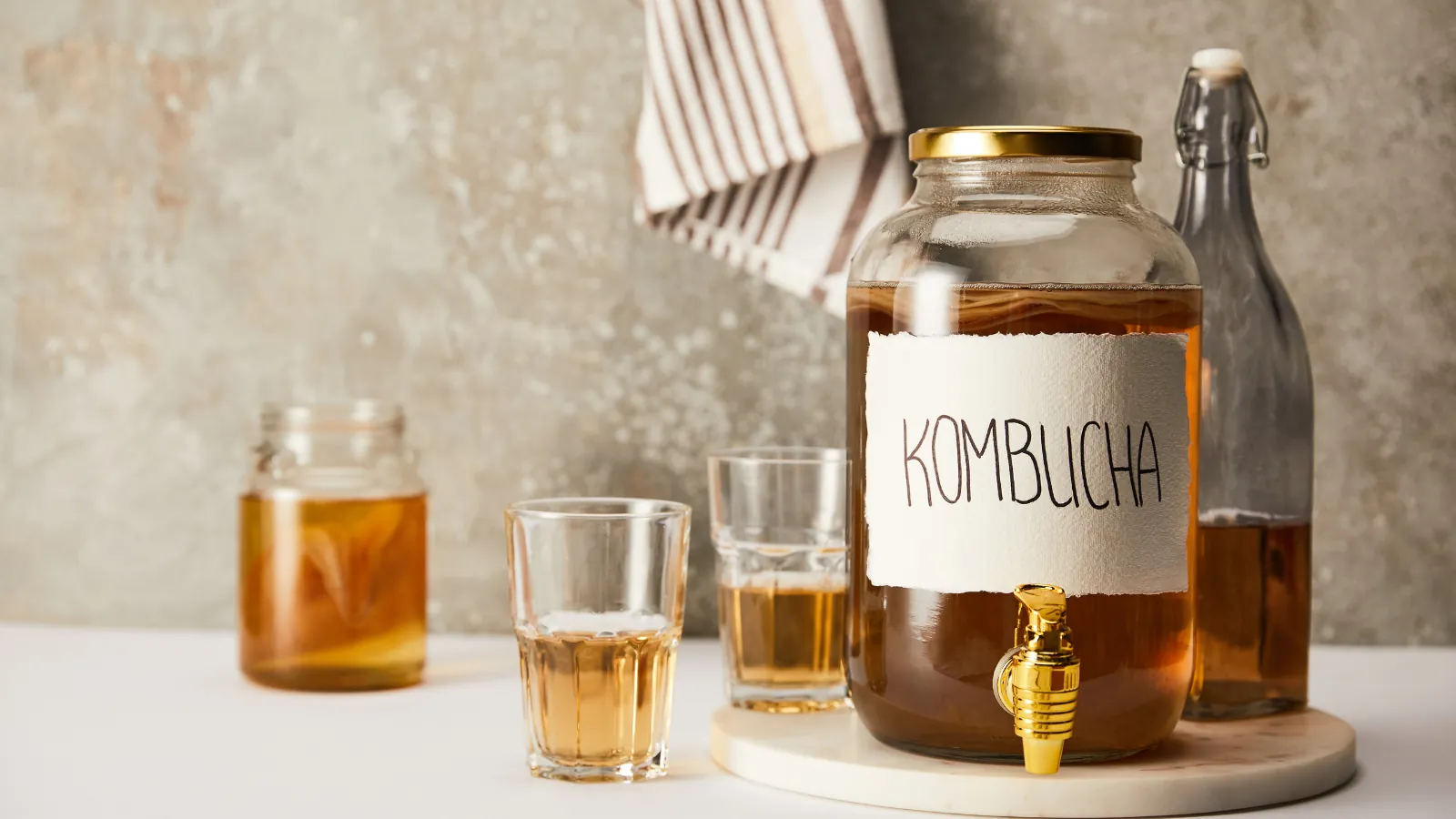
Is Kombucha Halal?
Kombucha is one of those products that sounds healthier and simpler than it actually is.
People hear “fermented tea” and assume it belongs in the same category as yogurt or pickles. But kombucha is much closer to the alcohol question than most ordinary fermented foods. The U.S. Alcohol and Tobacco Tax and Trade Bureau says kombucha is treated as an alcohol beverage if it contains 0.5% alcohol by volume or more, and it warns that even kombucha bottled below that threshold can later cross it because fermentation may continue in the bottle. oai_citation:0‡TTB
That is why the right question is not just:
“Is fermentation halal?”
The better question is:
“What kind of fermented product is kombucha, how much alcohol does it contain, and does this specific bottle stay safely below the level that turns it into an actual alcohol problem?”
Kombucha is not the same as ordinary fermented food
This is the first thing that makes the topic easier.
FDA’s fermented-food guidance includes foods such as yogurt, pickles, sauerkraut, cheese, olives, beer, and wine under the wider fermentation category. That shows fermentation itself is only a process, not a verdict. oai_citation:1‡IFANCA
But IFANCA’s halal consumer guidance makes an important distinction: most fermented foods do not produce ethanol at levels that create a halal concern, while fermented drinks deserve more caution. It specifically says ordinary fermented foods such as yogurt and pickles are generally acceptable even though they may contain tiny residue-level ethanol, and it separately flags kombucha and soy sauce as cases that need closer attention. oai_citation:2‡IFANCA
That is the key difference.
Kombucha is not just “another fermented food.”
It is a fermented drink, and fermented drinks sit much closer to the alcohol line.
Why kombucha raises more concern than yogurt or pickles
Kombucha is made through fermentation, and that fermentation can generate alcohol.
TTB states that kombucha regulations apply when the drink is 0.5% ABV or more at any time during production, at bottling, or even later due to continued fermentation in the container. TTB also explains that a product can be below 0.5% when bottled but still become an alcohol beverage later if the alcohol rises after bottling. oai_citation:3‡TTB
That matters for Muslim consumers because it means kombucha is not only a theoretical fermentation question. It is a real product category where alcohol measurement matters.
So the practical issue becomes:
- not all kombucha is identical
- not all bottles stay the same
- not every “wellness drink” label tells the full halal story
The easiest way to divide kombucha
A much more useful way to think about kombucha is to separate it into three practical categories.
1. Kombucha clearly sold as an alcoholic beverage
This is the easiest case to judge.
TTB’s hard kombucha guidance says “hard kombucha” refers to kombucha with 0.5% alcohol by volume or more. oai_citation:4‡TTB
For a Muslim consumer, this is usually the clearest no-go category. If the product is openly sold and regulated as an alcohol beverage, the halal issue is no longer subtle.
2. Regular kombucha marketed as non-alcoholic or low alcohol
This is the category most people mean.
These products are often sold as ordinary refrigerated drinks, but TTB makes clear that even regular kombucha can cross the 0.5% threshold if fermentation continues. oai_citation:5‡TTB
This is why kombucha often becomes mashbooh for many Muslims:
- it is not automatically the same as wine or beer
- but it is not automatically as simple as yogurt either
3. Homemade kombucha
This is often the hardest category of all.
Because once kombucha is homemade, the consumer usually has much less reliable control over:
- alcohol level
- fermentation duration
- storage conditions
- continued fermentation after bottling
TTB’s guidance about alcohol rising through continued fermentation helps explain why homemade kombucha is usually harder, not easier, from a halal-confidence perspective. oai_citation:6‡TTB
What some fatwa guidance says
There are modern fatwa-style answers that distinguish between tiny non-intoxicating traces and truly intoxicating products.
IslamQA.info has an answer saying that kombucha containing a very small amount of alcohol that does not intoxicate is not haram on that basis alone. oai_citation:7‡IFANCA
That kind of answer helps explain why some Muslims are comfortable with carefully selected kombucha products. But from a practical consumer angle, the harder part is not only the legal theory. The harder part is knowing what is actually in the bottle in front of you.
That is why even if a person follows a more permissive view on very low, non-intoxicating levels, kombucha can still remain a product that deserves more caution than ordinary fermented foods.
Why kombucha often becomes mashbooh
Kombucha becomes mashbooh for the same reason many modern products do:
- the product sounds clean and simple
- the label may look wellness-focused
- the consumer assumes “tea” and “fermented” are harmless
- but the real halal question depends on alcohol level and fermentation behavior
TTB’s repeated warning that alcohol can increase after bottling is exactly why kombucha does not fit neatly into a simple “fermented foods are fine” category. oai_citation:8‡TTB
So for many Muslims, kombucha is not automatically haram, but it is also not something to drink casually without checking.
A practical kombucha table
| Kombucha situation | What it usually means | Practical halal response |
|---|---|---|
| Hard kombucha | Alcohol beverage category | Avoid |
| Regular bottled kombucha with unclear alcohol status | Fermented drink with real alcohol-related concern | Treat with caution |
| Clearly verified product staying below alcohol-beverage threshold | Lower concern, but still not as simple as yogurt | Depends on the method you follow |
| Homemade kombucha | Harder to control and verify | Higher caution |
| Ordinary fermented foods like yogurt or pickles | Different category with tiny residue-level fermentation byproducts | Usually much easier |
What to check before drinking kombucha
If you want a practical Muslim consumer method, use this order:
1. Check whether it is hard kombucha
If yes, the question is basically over. TTB treats hard kombucha as kombucha at 0.5% ABV or more. oai_citation:9‡TTB
2. Look for actual alcohol information
If the product gives you no usable clarity at all, confidence drops immediately.
3. Remember that kombucha is a fermented drink, not just a fermented food
That means it deserves more caution than yogurt, pickles, or sauerkraut. IFANCA’s halal consumer guidance makes this distinction very clearly. oai_citation:10‡IFANCA
4. Be more cautious with homemade kombucha
The consumer has less control over fermentation and alcohol certainty.
5. If you want the least confusing path, skip kombucha and choose easier fermented foods
That is often the most practical answer for Muslims who do not want to spend time navigating borderline drink categories.
Common mistakes Muslims make with kombucha
Mistake 1: treating all fermented products like one category
They are not. Yogurt and kombucha do not create the same halal question. IFANCA explicitly distinguishes ordinary fermented foods from fermented drinks. oai_citation:11‡IFANCA
Mistake 2: assuming kombucha is harmless because it is sold in the health section
Retail image is not the same as halal clarity. TTB’s guidance shows why kombucha still sits close to an alcohol threshold issue. oai_citation:12‡TTB
Mistake 3: thinking “non-alcoholic” packaging settles everything
TTB warns that kombucha can increase in alcohol after bottling due to continued fermentation. oai_citation:13‡TTB
Mistake 4: comparing kombucha to yogurt
That is one of the least helpful comparisons. IFANCA uses yogurt and pickles as examples of easier fermented foods while warning that kombucha deserves more scrutiny. oai_citation:14‡IFANCA
FAQ
Is kombucha halal?
Not automatically. It depends on the product, its alcohol level, and the method you follow. Kombucha is a fermented drink, not just an ordinary fermented food, so it deserves more caution. oai_citation:15‡IFANCA
Why is kombucha different from yogurt or pickles?
Because kombucha is a fermented beverage that can approach or cross real alcohol thresholds, while ordinary fermented foods like yogurt and pickles are usually treated as acceptable despite tiny fermentation byproducts. oai_citation:16‡IFANCA
What alcohol level makes kombucha an alcohol beverage in U.S. regulation?
TTB says kombucha is treated as an alcohol beverage at 0.5% ABV or more. oai_citation:17‡TTB
Is hard kombucha halal?
Hard kombucha is the clearest no-go category because it is explicitly a kombucha product at or above the alcohol-beverage threshold. oai_citation:18‡TTB
Is homemade kombucha easier to trust?
Usually no. Homemade kombucha is harder to verify because fermentation and alcohol level are less controlled. TTB’s guidance about continued fermentation helps explain why. oai_citation:19‡TTB
What is the easiest practical rule?
Treat ordinary fermented foods as one category and kombucha as another. If you want the least confusion, avoid kombucha and choose easier fermented foods instead. oai_citation:20‡IFANCA
Keep Learning
If this guide helped, you may also want to read:
- Is Fermented Food Halal?
- Is Soy Sauce Halal?
- Is Vinegar Halal?
- Difference Between Halal, Haram, and Mashbooh
These guides help make fermentation-related halal decisions much easier and more consistent.
Final CTA
Kombucha gets much less confusing once you stop treating it like an ordinary healthy tea.
What matters is knowing that it is a fermented drink with a real alcohol threshold question, and that for many Muslims the smartest path is either careful verification or simply choosing easier drinks that do not create this much uncertainty.
Related Halal Checks
Curious about specific products? Check their halal status:
Is Doritos (Nacho Cheese) Halal?
DOUBTFULIt depends on the country. US Nacho Cheese Doritos contain animal enzymes; UK and EU versions use microbial ones, and some markets are certified.
Is Rennet Halal?
DOUBTFULRennet can be animal, microbial or FPC. Animal rennet from non-halal slaughter is rejected; microbial is widely accepted.
Is Cetyl / Cetearyl Alcohol Halal?
DOUBTFULCetyl alcohol in cosmetics can be plant oils or animal fats. External use is broadly fine; strict tracers prefer plant-declared sources.
Keep learning
If this guide helped, you may also want to read:
10 Hidden Non-Halal Ingredients in Everyday Food
A practical guide to 10 hidden non-halal or mashbooh ingredients Muslims often miss in candy, bread, cheese, desserts, supplements, and processed foods.
What Muslims Should Always Check in Candy
A practical guide to the ingredients that make candy tricky for Muslims, including gelatin, glycerin, flavorings, coatings, and why the sweetest products are often the least transparent.
Is Ashwagandha Halal?
A practical guide to ashwagandha for Muslim consumers, including why the herb itself is usually not the hardest halal issue, and why capsules, gummies, and inactive ingredients often matter more.
Is Apple Cider Vinegar Halal?
A practical guide to apple cider vinegar for Muslim consumers, including why fermentation does not automatically make it haram, what scholars generally say about vinegar, and when extra caution may still make sense.