Is Magnesium Stearate Halal?
A practical guide to magnesium stearate for Muslim consumers. Learn what it is, why source matters, and how to check supplements and food products more wisely.
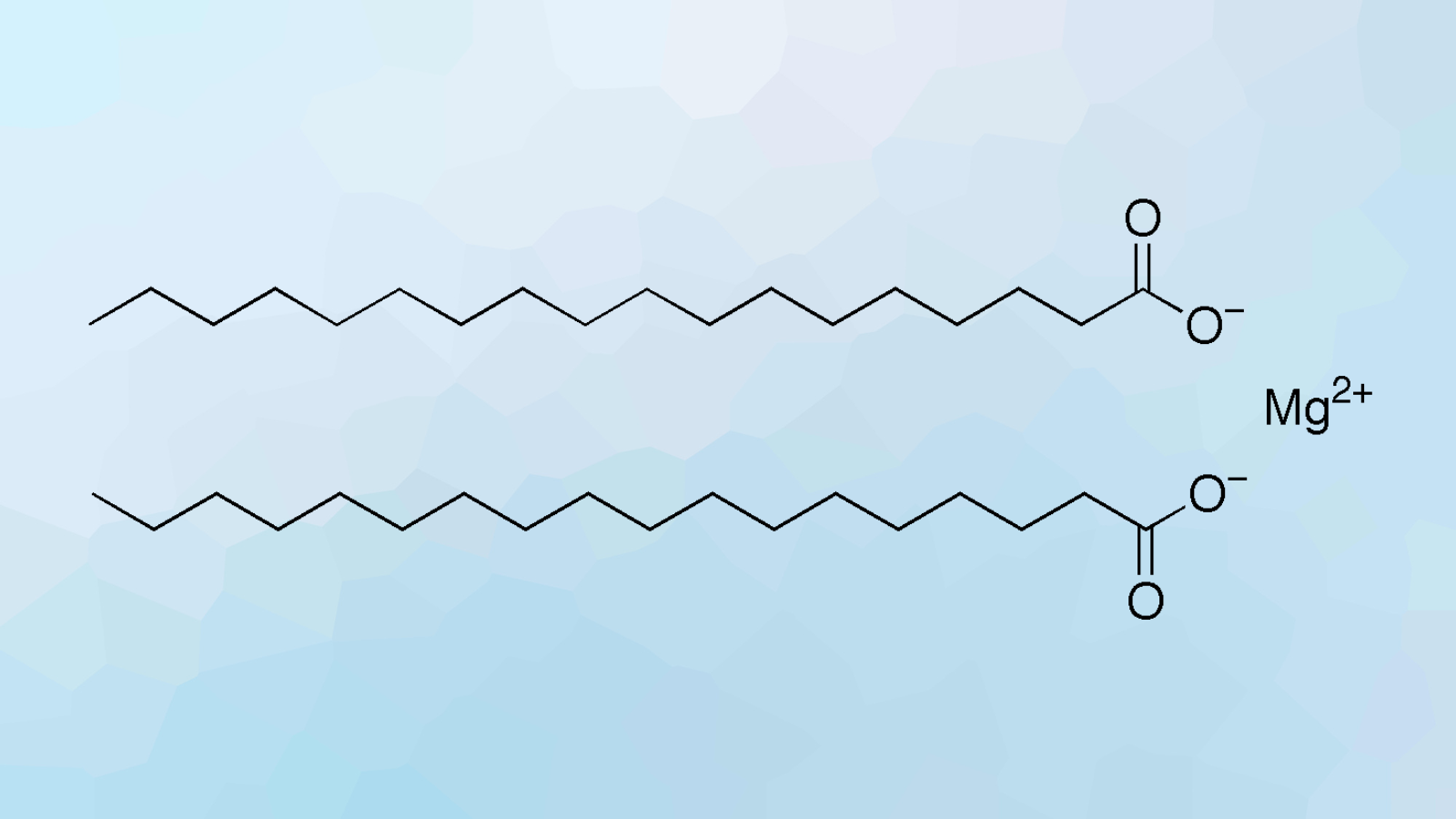
Is Magnesium Stearate Halal?
You read the label on a vitamin, capsule, powder, or processed food and notice one ingredient that sounds technical but keeps showing up: magnesium stearate. It does not sound obviously animal-based, but it also does not sound clearly plant-based. That is why many Muslims pause when they see it.
The halal question here is not really about the name itself. It is about the fatty acid source behind it. FDA lists magnesium stearate as stearic acid, magnesium salt, and the UK Food Standards Agency lists E470b as magnesium salts of fatty acids. MUIS’s additive listing also places magnesium stearate under the stearic-acid family, and notes that stearic acid can come from animal fats and vegetable oils. oai_citation:0‡HFP App External
This guide explains what magnesium stearate is, when it is usually less concerning, when it becomes mashbooh, and how Muslims can check it without turning every supplement or ingredient label into a guessing game. oai_citation:1‡HFP App External
Quick Answer
Magnesium stearate is not automatically haram, but it is also not automatically halal in every case.
The practical rule is:
- magnesium stearate is the magnesium salt of stearic acid oai_citation:2‡HFP App External
- in UK/EU-style additive systems, it is associated with E470b, the magnesium salts of fatty acids category oai_citation:3‡Food Standards Agency
- MUIS says stearic acid may come from animal fats and vegetable oils oai_citation:4‡Isomer User Content
- IFANCA flags magnesium stearate as a doubtful ingredient in product categories such as cereals and nutritional supplements oai_citation:5‡IFANCA
- if the source is unclear, many Muslim consumers treat it as a source-dependent or mashbooh ingredient
So the shortest honest answer is this: magnesium stearate is mainly a source question. oai_citation:6‡Isomer User Content
Why It Comes Up So Often
Magnesium stearate is everywhere because it is useful. FDA’s food-substance entry lists technical effects such as anticaking agent, free-flow agent, humectant, and formulation aid. Published safety reviews also note its widespread use in foods, supplements, tablets, capsules, powders, confectionery, and baking ingredients. oai_citation:7‡HFP App External
That means Muslims do not meet magnesium stearate in just one place. It can appear in:
- nutritional supplements
- capsules and tablets
- cereals
- confectionery
- powders
- some processed food products
IFANCA’s Halal Shopper’s Quick Reference Guide specifically flags magnesium stearate in nutritional supplements and places it alongside other ingredients that may need investigation. oai_citation:8‡IFANCA
What Magnesium Stearate Actually Is
Magnesium stearate is a magnesium salt made from fatty acids, mainly from the stearic-acid family. FDA’s food-substance database lists it directly as stearic acid, magnesium salt. JECFA’s monograph defines magnesium stearate as a mixture of magnesium salts of fatty acids obtained from edible fats and oils, consisting mainly of magnesium stearate and palmitate in varying proportions. oai_citation:9‡HFP App External
In plain English, it is not added because a product needs more nutrition. It is usually there to help manufacturing. It can:
- improve powder flow
- reduce sticking
- help capsules and tablets release more smoothly
- support processing consistency
That is why it shows up so often in supplements and tablets. oai_citation:10‡HFP App External
Is Magnesium Stearate the Same as E470b?
In ingredient logic, they are closely connected, but not every label will show them in the same way.
The UK Food Standards Agency lists E470b as magnesium salts of fatty acids. Magnesium stearate is one of the practical ingredients in that family. So if you see E470b on a UK/EU-style label, you are dealing with the same general halal issue: what is the fatty acid source? oai_citation:11‡Food Standards Agency
That means these forms all point to a related source question:
- magnesium stearate
- stearic acid, magnesium salt
- magnesium salts of fatty acids
- E470b
Why the Source Matters
This is the most important section in the whole article.
Magnesium stearate itself is a salt. The deeper halal question is where the underlying stearic acid / fatty acids came from. MUIS’s additive listing states that stearic acid may come from all animal fats and vegetable oils, and may also be prepared synthetically for commercial use. JECFA similarly says magnesium stearate is obtained from edible fats and oils. oai_citation:12‡Isomer User Content
For a Muslim consumer, that means the source may be:
- vegetable
- animal-derived
- possibly synthetic or mixed, depending on manufacturing route
So the ingredient may be perfectly lawful in food regulation while still remaining incomplete from a halal point of view if the source is not disclosed. oai_citation:13‡Isomer User Content
Why Magnesium Stearate Becomes Mashbooh
Magnesium stearate becomes mashbooh when the label names the ingredient but not the source.
A package may say:
- magnesium stearate
- stearic acid, magnesium salt
- E470b
But it may not say:
- vegetable-derived magnesium stearate
- palm-based magnesium stearate
- animal-derived stearic acid
- synthetic source
That is exactly why IFANCA flags it in shopper guidance. The issue is not that magnesium stearate is automatically haram. The issue is that the label often does not tell you whether the stearic acid came from a plant or animal fat source. oai_citation:14‡IFANCA
Where It Usually Appears
Magnesium stearate is especially common in products where manufacturing flow and compression matter.
Common examples
- tablets
- capsules
- nutritional supplements
- powdered blends
- some cereals
- some confectionery
IFANCA flags it in cereal and nutritional supplement contexts, and FDA plus safety-review materials confirm its widespread use in foods, tablets, capsules, and powders. oai_citation:15‡IFANCA
When It Is Usually Less Concerning
Some situations are easier than others.
Magnesium stearate is usually less concerning when:
- the product is halal-certified
- the manufacturer confirms a vegetable source
- the product is vegan-certified
- the manufacturer has transparent sourcing documentation
A vegan-certified product can be especially helpful because it should exclude animal-derived ingredients by design. That does not make vegan identical to halal, but for magnesium stearate it can be a strong practical clue against animal fat sources. This is an inference from vegan-label rules together with the source question around stearic acid. oai_citation:16‡Isomer User Content
When It Needs More Checking
Magnesium stearate deserves more attention when:
- the product is not halal-certified
- it is a supplement or capsule you take regularly
- the label gives no source detail
- the product already contains other mashbooh ingredients
- the manufacturer gives no sourcing information
This matters most in:
- supplements
- capsules
- vitamins
- specialty powders
- highly processed products
Because these are exactly the places where magnesium stearate is often used as a lubricant or formulation aid. oai_citation:17‡HFP App External
How to Check Magnesium Stearate
Use this when you see magnesium stearate on a label.
-
Check for halal certification first.
This is usually the clearest answer. -
Look for source wording.
If the product or manufacturer says the magnesium stearate is vegetable-derived, that is much more reassuring. -
Check whether the product is vegan-certified.
This can be a strong clue that the ingredient is not animal-derived. -
Think about the product category.
Magnesium stearate in a daily supplement may be more worth verifying than in a one-time product. -
Read the full label, not just one ingredient.
It may not be the only doubtful ingredient present. -
Contact the manufacturer if needed.
Ask whether the magnesium stearate or stearic acid is vegetable-derived, animal-derived, or synthetic.
A Practical Reference Table
| Label situation | What it usually means | Practical halal response |
|---|---|---|
| Halal-certified product | Source and process reviewed under halal standards | Usually the clearest option |
| Vegan-certified product | No animal-derived ingredients expected | Often a strong clue |
| Manufacturer confirms vegetable source | Plant source indicated | Usually reassuring |
| Plain “magnesium stearate” | Source unclear | Verify or choose a clearer product |
| E470b only | Additive family shown, but no source detail | Do not assume; check context |
| Supplement with multiple vague excipients | Higher chance of source uncertainty | Be more careful |
Quick tip: Want a faster way to review ingredients while shopping? The AllHalal app helps you check products and halal-related details more easily.
Real Shopping Shortcuts
You do not need to treat every product with magnesium stearate as forbidden.
A better everyday rule is:
- do not panic at the ingredient name
- do not assume all magnesium stearate is fine
- use certification, vegan clues, and manufacturer transparency together
- verify products you take regularly
Good practical shortcuts
- trust credible halal certification
- prefer brands that confirm vegetable-derived excipients
- use vegan labeling as a helpful clue
- be more careful with supplements when the label stays vague
Common Mistakes
These are the biggest mistakes Muslim consumers make with magnesium stearate:
- assuming it is always synthetic and therefore automatically fine
- assuming it is always animal-derived
- treating E470b as if it answers the source question by itself
- ignoring halal certification when it is available
- checking only active ingredients in supplements and ignoring excipients
- overcomplicating the issue when a manufacturer could simply confirm the source
A better approach is to understand that magnesium stearate is mainly a stearic-acid source question, not a panic word.
FAQ
Is magnesium stearate halal?
Sometimes yes, sometimes it is doubtful. The main issue is the source of the underlying stearic acid or fatty acids. MUIS says stearic acid may come from animal fats or vegetable oils. oai_citation:18‡Isomer User Content
What is E470b?
E470b is the UK/EU additive designation for magnesium salts of fatty acids. oai_citation:19‡Food Standards Agency
Can magnesium stearate come from animals?
The underlying stearic acid can come from animal fats or vegetable oils, according to MUIS. That is why the halal question exists. oai_citation:20‡Isomer User Content
Is magnesium stearate in supplements halal?
Not automatically. IFANCA specifically flags magnesium stearate in nutritional supplements as an ingredient worth checking. oai_citation:21‡IFANCA
Is vegan magnesium stearate usually okay?
A vegan-certified product is often a strong clue that the magnesium stearate is not animal-derived, though halal certification is still the stronger Muslim-specific signal.
What should I do if the source is unclear?
The most practical answer is to verify the source, choose a halal-certified product, or choose a brand that confirms vegetable-derived excipients.
Key Takeaways
- Magnesium stearate is the magnesium salt of stearic acid. oai_citation:22‡HFP App External
- In UK/EU additive systems, the related additive family appears as E470b, magnesium salts of fatty acids. oai_citation:23‡Food Standards Agency
- The main halal issue is source.
- MUIS states that stearic acid may come from animal fats and vegetable oils. oai_citation:24‡Isomer User Content
- IFANCA flags magnesium stearate in supplements and other categories as an ingredient that may need investigation. oai_citation:25‡IFANCA
- The most practical rule is to verify the source when the label stays unclear and to prefer halal-certified products when available.
Keep Learning
If this guide helped, you may also want to read:
- How to Check if Food Additives Are Halal
- What Makes an Ingredient Mashbooh?
- Are Mono and Diglycerides Halal?
- How to Read Ingredient Labels for Halal
These guides will help you build a smarter ingredient-checking system instead of reacting to one supplement excipient in isolation.
Final CTA
Magnesium stearate stops being confusing once you know what question to ask.
What matters is not the technical name by itself, but the source behind it. Learn to spot the ingredient, check the context, and build a calmer halal-shopping system with AllHalal.info.
Related Halal Checks
Curious about specific products? Check their halal status:
Is Ice Cream Halal?
DOUBTFULPlain dairy ice cream is halal, but gelatin, animal emulsifiers, carmine and alcohol-based vanilla extract make many commercial flavours doubtful.
Is Doritos (Nacho Cheese) Halal?
DOUBTFULIt depends on the country. US Nacho Cheese Doritos contain animal enzymes; UK and EU versions use microbial ones, and some markets are certified.
Is Skittles Halal?
HALALSkittles no longer contain gelatin or carmine and are made from plant-based ingredients. The original sweets are halal; Skittles Gummies are not.
Keep learning
If this guide helped, you may also want to read:
Are Probiotics Halal?
A practical guide to probiotics for Muslim consumers, including when probiotics are usually fine, where halal questions actually come up, and why the capsule or gummy can matter as much as the probiotic itself.
Is Ashwagandha Halal?
A practical guide to ashwagandha for Muslim consumers, including why the herb itself is usually not the hardest halal issue, and why capsules, gummies, and inactive ingredients often matter more.
Are Mushroom Supplements Halal?
A practical guide to mushroom supplements for Muslim consumers, including why the mushroom itself is usually not the hardest halal issue, and why capsules, gummies, and inactive ingredients often matter more.
Why Alcohol-Free” Does Not Always Mean Halal
A practical guide to why “alcohol-free” labels can still be misleading for Muslim consumers, including drinks, flavorings, skincare, and the hidden difference between no ethanol, trace alcohol, and full halal suitability.